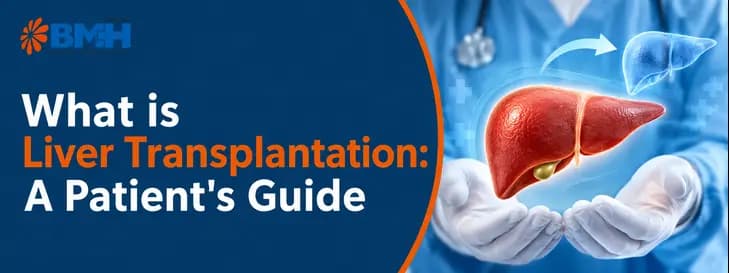

Liver transplantation is a surgical procedure in which a diseased or failing liver is replaced with a healthy liver from a donor. This life-saving operation gives patients with end-stage liver disease a second chance at life and restored health. If you or a loved one has been told you might need a transplant, understanding the basics of this procedure can help you make informed decisions about your care.
This guide covers who needs it, the donor routes used in India, how surgery and recovery work, what drives cost, and how to judge a transplant centre, including what Baby Memorial Hospital (BMH) in Kozhikode offers.
What is liver transplantation and why do patients need it?
Liver transplantation is surgery to replace your liver with a healthy liver from a donor when your own liver no longer works well enough to keep you alive. Your liver filters waste from your blood, makes proteins, helps fight infection, and stores energy, jobs that a damaged liver cannot perform. When liver disease reaches end-stage (called liver cirrhosis or acute liver failure), the organ shuts down so completely that transplant becomes the only remaining treatment option.
When Is a Liver Transplant Needed?
Transplant is considered when liver damage is irreversible or life-threatening and medicines cannot hold the disease back.
Common reasons in adults
- Cirrhosis from hepatitis B or C, alcohol, or autoimmune disease.
- Fatty liver disease. In India it is now the leading indication, with about four in ten adults affected by fatty liver.
- Liver cancer in carefully selected patients, as the NHS notes.
- Acute liver failure, where a healthy liver fails within days or weeks.
Common reasons in children
Biliary atresia, where bile ducts are blocked or absent in infancy, is the most common indication in Indian paediatric series. Metabolic and genetic liver diseases follow.
How does the liver transplantation procedure work?
Liver transplantation involves several stages: first, your surgical team prepares you medically and mentally for the operation; second, when a suitable donor liver becomes available, you are called to the hospital for surgery; third, surgeons remove your diseased liver and connect the new liver's blood vessels and bile ducts to your body; and fourth, you spend weeks recovering in the hospital before returning home for long-term follow-up care.
The surgery itself takes 4 to 8 hours depending on your condition and how much scar tissue the surgical team must remove. Surgeons make an incision across your upper abdomen to access the liver, then carefully detach it from the blood vessels and bile duct while preserving as many healthy structures as possible. The donor liver is then flushed with a cold preservation solution to protect it during transport and implanted into your body. Surgeons reconnect the hepatic artery (which brings blood to the liver), the portal vein (which brings nutrient-rich blood from the stomach and intestines), and the bile duct (which drains bile). After surgery, intensive monitoring in the hospital ensures the new liver is functioning and your body is not rejecting it. The first weeks after transplant are critical because rejection risk is highest during this period.
Who is eligible for a liver transplant?
Not all patients with liver disease are candidates for transplantation. Doctors assess your overall health, the severity of your liver disease, your ability to follow strict medication schedules, and your mental readiness for life after transplant. To be considered, you must have end-stage liver disease or acute liver failure that is life-threatening and has not responded to medical treatment. Patients with certain cancers that have spread beyond the liver, severe heart or lung disease, active infections, or active alcohol or drug use are typically not eligible because the risks outweigh the benefits.
Your transplant team will perform blood tests, imaging scans (ultrasound, CT, or MRI), and heart tests (electrocardiogram and sometimes echocardiogram) to confirm that your body can survive the surgery. You will also meet with a social worker and psychologist to ensure you understand the commitment needed after transplant, taking immunosuppressive medications for life, attending frequent follow-up appointments, avoiding alcohol and recreational drugs, and maintaining good nutrition and exercise habits. Age alone is not a barrier; doctors focus on your physiological fitness rather than your birth year. Eligibility also depends on your position on the transplant waiting list, which prioritizes patients with the most urgent medical need.


Types of liver transplantation and donor options
Liver transplants come from two main sources: deceased donors (people who have died and whose families or the individual themselves consented to donation) and living donors (typically a family member or friend who donates a portion of their liver). Each option has distinct advantages and timing considerations.
Deceased donor liver transplant: You are placed on a national waiting list and receive a call when a suitable deceased donor liver becomes available. Matching is based on blood type, body size, time on the waiting list, and medical urgency. The waiting period can be months or longer, during which your condition may worsen. The advantage is that a deceased donor provides a whole liver, and the donor's family finds comfort knowing their loved one saved lives.
Living donor liver transplant: A healthy family member or friend donates part of their liver (usually the right lobe), and the remaining portions in both donor and recipient regenerate to full size within weeks. This option allows you to schedule surgery when you and the donor are in optimal condition and typically offers better outcomes because surgery happens sooner and the relationship may improve immunological compatibility. The risk is that the donor, who is healthy, undergoes major surgery, which is an ethical consideration your team will discuss carefully.
Some patients receive livers from donors after circulatory death (DCD), meaning the heart has stopped but organs can still be recovered and transplanted. Your transplant team will explain which option is safest for your particular situation.
What to expect before, during, and after transplant
Your transplant journey spans several months and involves three phases: preparation, the surgery day itself, and recovery and lifelong follow-up care.
Before surgery: You will attend multiple appointments with your transplant team, hepatologists (liver specialists), surgeons, nurses, social workers, and dietitians. You will receive education on post-transplant medications, lifestyle changes, and warning signs of rejection. You may be asked to quit smoking, limit alcohol (if not already abstinent), exercise regularly, and improve your nutrition to strengthen your body before the operation. Blood work and imaging will be repeated to ensure your condition is stable and your heart and lungs can tolerate surgery. If you are on a waiting list for a deceased donor, you must be ready to come to the hospital within hours of the call.
During surgery: You will receive general anesthesia so you sleep throughout the 4-to-8-hour operation. A breathing tube delivers oxygen, and monitoring equipment tracks your heart rhythm, blood pressure, and oxygen levels continuously.
After surgery: You will spend 1 to 2 weeks in the hospital, initially in an intensive care unit (ICU) where nurses monitor you closely for bleeding, infection, and signs of rejection. You will start immunosuppressive medications immediately to prevent your immune system from attacking the new liver. These medications must be taken for the rest of your life. At discharge, you will have a strict schedule of blood tests and clinic visits to check liver function, medication levels, and overall health. Most patients return to normal activities within 2 to 3 months, though you must avoid heavy lifting and high-impact sports for up to 6 months. Long-term, you must maintain a healthy diet, attend all follow-up appointments, take medications as prescribed, avoid alcohol completely, and watch for signs of rejection (fever, fatigue, jaundice, pale stools, dark urine) which require immediate medical attention.
Liver Transplant Care at Baby Memorial Hospital, Kozhikode
Baby Memorial Hospital (BMH) is a multi-speciality hospital in Kozhikode, with branches in Kannur, Payyanur, Thodupuzha, Vadakara and Perumbavoor. Its Liver Transplantation Unit provides care for patients with end-stage liver disease, acute liver failure and complex hepatobiliary conditions.
The multidisciplinary team includes hepatologists Dr. Joy Varghese and Dr. Mohamed Fawas N.; surgical gastroenterologists Dr. Ramalingam T, Dr. Sylesh Aikot and Dr. Mithun V V; and medical gastroenterologists Dr. Biju I K, Dr. Pradeep Kumar P and Dr. Sameer Sakkeer Hussain. The unit offers living donor and deceased donor liver transplantation, along with pre-transplant evaluation and post-transplant follow-up.
What families can expect:
- Coordinated evaluation across hepatology, surgery, anaesthesia and nutrition.
- Separate donor care, so donor safety is protected.
- Paediatric support: in May 2025 the ViswaSanthi Foundation and BMH announced “Be a Hero”, offering liver transplants at significantly subsidised rates for eligible children from economically weaker families.
- NRI and out-of-state coordination for records review and teleconsults.
Conclusion
Liver transplantation replaces a failed liver with a healthy donor liver and, for the right patient, restores long-term health. The route depends on donor availability and urgency, eligibility is decided through careful evaluation, and recovery is measured in months with lifelong medicines. If you or a family member has been advised to consider a transplant, an early consultation gives you the most options. BMH’s hepatology team can review your reports and explain your choices.
Chat with our assistant or click Contact Us to speak with BMH’s liver care coordinators.
Medical disclaimer: This article is for general information only and is not medical advice, diagnosis or treatment. Liver transplant decisions depend on individual evaluation. Consult a qualified hepatologist or transplant surgeon before making any medical decision.