
Lymphoma is a cancer affecting lymphocytes, a type of white blood cell that plays a vital role in your immune system. A lymphoma diagnosis usually arrives with a strange mix of relief and dread, relief that a swollen lymph node finally has an explanation, dread at the word "cancer." What most patients don't realise at first is that lymphoma isn't one disease with one treatment path. It's a family of more than 60 related cancers, and the right therapy for one subtype can be entirely wrong for another.
When lymphoma is diagnosed, oncologists develop a personalised treatment plan based on the type, stage, and your overall health. Understanding the available treatment options helps patients and families make informed decisions about their care pathway.
This guide walks through how lymphoma is diagnosed, the full range of modern treatment approaches, from standard chemotherapy to CAR-T cell therapy, and how specialists decide which combination is right for a given patient.
What Is Lymphoma?
Lymphoma develops when lymphocytes grow uncontrollably in lymph nodes, spleen, bone marrow, or other organs. The primary goal of treatment is to destroy cancer cells while preserving healthy immune function.
Treatment success depends on early diagnosis, accurate staging, and a tailored approach that considers whether the lymphoma is Hodgkin or non-Hodgkin type. Your oncologist will assess factors like age, disease stage, organ involvement, and genetic markers to recommend the most effective therapy.
Some patients achieve remission with a single treatment modality, while others benefit from a combination approach. The emotional and physical impact of lymphoma treatment is significant, and comprehensive supportive care alongside medical therapy improves quality of life during the healing process.
Early Symptoms Patients Commonly Report
- A painless, enlarging lump in the neck, underarm, or groin
- Unexplained fever, drenching night sweats, or weight loss (often grouped as "B symptoms")
- Persistent fatigue disproportionate to activity level
- Itching without a rash, or unexplained cough/breathlessness if lymph nodes in the chest are involved
None of these symptoms are exclusive to lymphoma, infections cause most swollen lymph nodes. But a lump that persists beyond 3–4 weeks, keeps growing, or is accompanied by fever and weight loss deserves a biopsy, not a wait-and-watch approach on its own.
Also Read: [What Are the Signs of Blood Cancer? Key Symptoms You Should Know](What Are the Signs of Blood Cancer? Key Symptoms You Should Know )
Types of Lymphoma: Hodgkin vs Non-Hodgkin
Lymphoma is broadly classified into two main categories: Hodgkin lymphoma and non-Hodgkin lymphoma (NHL).
1. Hodgkin Lymphoma (HL) is identified by a specific abnormal cell, the Reed-Sternberg cell, under the microscope. It tends to spread in an orderly fashion from one lymph node group to the next, which is part of why it responds so predictably well to treatment. It's more common in younger adults (15–35) and again in adults over 55.
2. Non-Hodgkin Lymphoma (NHL) is a much larger and more varied group, over 60 subtypes, broadly split into B-cell and T-cell lymphomas. The most common subtypes seen in Indian practice include diffuse large B-cell lymphoma (DLBCL, the most frequent aggressive subtype), follicular lymphoma (typically slow-growing), mantle cell lymphoma, marginal zone lymphoma, and various T-cell lymphomas.
| Feature | Hodgkin Lymphoma | Non-Hodgkin Lymphoma |
|---|---|---|
| Growth pattern | Predictable, contiguous spread | Variable, indolent or aggressive |
| Typical age at diagnosis | 20s–30s and 55+ | Often 50s, younger than Western average |
| Common first-line therapy | ABVD chemotherapy ± radiation | R-CHOP (B-cell) or subtype-specific regimens |
| General outlook | Among the most curable cancers | Ranges widely by subtype and stage |
How Lymphoma Is Diagnosed and Staged
Diagnosis starts with an excisional lymph node biopsy, removing an entire node (not just a needle sample) wherever possible, because pathologists need enough tissue to run immunophenotyping and flow cytometry to pin down the exact subtype. This step matters more than most patients realise: treating "lymphoma" generically without confirming the subtype is one of the most common reasons for a mismatched treatment plan.
Once confirmed, staging typically involves a PET-CT scan to map how many lymph node regions are involved and whether the disease has spread beyond the lymphatic system, and often a bone marrow biopsy to check marrow involvement. Staging follows the Ann Arbor/Lugano system (Stage I through IV), and this stage, combined with the specific subtype, is what actually drives the treatment plan, not just the word "lymphoma" on a report.
Lymphoma Treatment: Types & Therapy Approaches
This is where lymphoma care has changed the most in the last decade. A patient diagnosed today has access to a genuinely wider toolkit than one diagnosed:
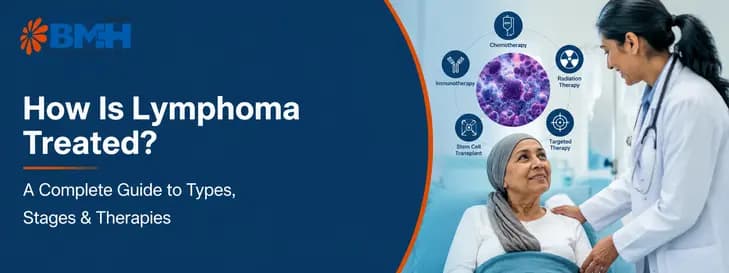
- Chemotherapy remains the backbone for most lymphomas. Hodgkin lymphoma is typically treated with the ABVD regimen (Adriamycin, Bleomycin, Vinblastine, Dacarbazine), delivered in cycles roughly every two weeks. Aggressive B-cell NHL, like DLBCL, is usually treated with R-CHOP, a combination of rituximab with four chemotherapy drugs, over 6–8 cycles. Most of this is delivered as day-care chemotherapy; patients go home the same day rather than staying admitted.
- Radiation therapy is often added for localised, early-stage disease, or to consolidate a partial response after chemotherapy. Modern techniques use "involved-site" radiotherapy, targeting only the originally affected node region with image guidance, to limit exposure to surrounding healthy tissue such as the heart and lungs.
- Immunotherapy and monoclonal antibodies work differently from chemotherapy: instead of directly poisoning dividing cells, they flag cancer cells for the immune system to destroy. Rituximab (targeting the CD20 protein on B-cells) transformed B-cell lymphoma treatment and is now standard alongside chemotherapy for most B-cell NHL subtypes. Checkpoint inhibitors have a defined role in relapsed Hodgkin lymphoma.
- Targeted therapy attacks specific molecular vulnerabilities rather than all dividing cells, BTK inhibitors for certain B-cell lymphomas, proteasome inhibitors for mantle cell lymphoma, and antibody-drug conjugates like brentuximab vedotin, which delivers chemotherapy directly to CD30-positive cells in relapsed Hodgkin lymphoma or certain T-cell lymphomas.
- CAR-T cell therapy is the newest tool: a patient's own T-cells are collected, genetically engineered to recognise lymphoma cells, and infused back. It's currently reserved for relapsed or refractory aggressive B-cell lymphomas after standard therapy has failed, and access in India is still concentrated in a small number of specialised centres.
- Bone marrow or stem cell transplant, usually autologous (using the patient's own cells), allows doctors to give much higher-dose chemotherapy than the body could otherwise tolerate, then "rescue" the bone marrow with the stored stem cells. It's most often used for relapsed lymphoma or high-risk disease in first remission.
- Active surveillance ("watch and wait") is a legitimate strategy, not inaction. For slow-growing, asymptomatic lymphomas like some follicular lymphomas, studies have shown no survival benefit to starting treatment immediately versus monitoring closely and treating only when the disease progresses or causes symptoms.
Also Read; [Difference Between Chemotherapy and Immunotherapy in Cancer Treatment](Difference Between Chemotherapy and Immunotherapy in Cancer Treatment )


Managing Side Effects During Treatment
While lymphoma treatment is necessary for disease control, managing side effects significantly improves treatment completion and quality of life. Common side effects vary by treatment type but frequently include nausea, fatigue, hair loss, infection risk, and mouth sores.
Chemotherapy-related nausea and vomiting can be effectively controlled with modern antiemetic medications taken before and after treatment. Fatigue, often the most distressing side effect, may be managed through gentle exercise, nutrition optimisation, and adequate rest. Infection risk requires careful monitoring and prompt reporting of fever or signs of infection to your medical team.
Many centres provide supportive care services including nutritional counselling, counselling for emotional wellbeing, and physical rehabilitation. Hair loss, while usually temporary, can be emotionally challenging; scalp cooling devices available at many treatment centres may reduce hair loss during chemotherapy.
Reproductive concerns are important for younger patients; discussing fertility preservation options before starting treatment helps protect future family planning possibilities. Regular communication with your healthcare team enables proactive side effect management rather than reactive crisis management.
Choose NAVA Cancer Institute at Baby Memorial Hospital for Lymphoma Treatment
Choosing where to begin lymphoma treatment is about more than reputation, it’s about having every stage of care coordinated in one place. At NAVA Cancer Institute, Baby Memorial Hospital, patients have access to diagnosis, PET-CT staging, medical and haemato-oncology, radiation oncology, and bone marrow transplant support through a multidisciplinary team, reducing the need to visit multiple centres.
Why this integrated approach matters:
- Comprehensive lymphoma diagnosis, staging, treatment, and follow-up under one roof.
- Multidisciplinary tumour board for personalised treatment planning.
- International patient services that assist Gulf patients with appointments, travel, and treatment coordination.
- A trusted tertiary-care hospital serving patients since 1987 with decades of oncology expertise.
Early diagnosis and accurate staging play a significant role in lymphoma outcomes, particularly for highly treatable cancers such as Hodgkin lymphoma.
Whether you're seeking a second opinion or exploring treatment options, consulting an experienced lymphoma specialist can help you understand the most appropriate treatment plan for your specific diagnosis.
Chat with our care team at NAVA Cancer Institute at Baby Memorial Hospital, Kozhikode, to schedule a consultation with our multidisciplinary oncology team.
MEDICAL DISCLAIMER: This article is intended for general informational purposes only and does not constitute medical advice, diagnosis, or treatment recommendations. Lymphoma diagnosis and treatment decisions should always be made in consultation with a qualified oncologist based on individual medical history, test results, and clinical evaluation. Baby Memorial Hospital and NAVA Cancer Institute do not guarantee specific treatment outcomes; individual results vary by patient and disease characteristics.