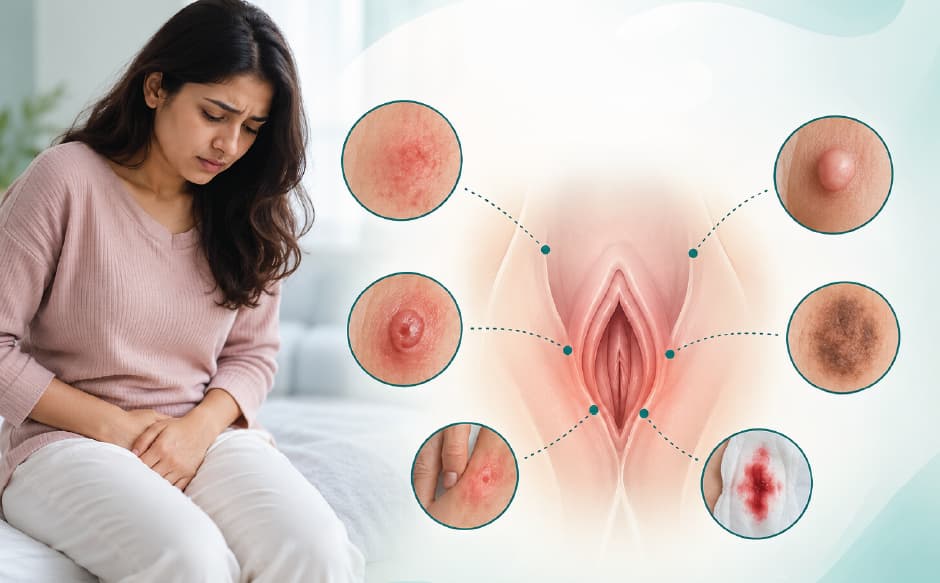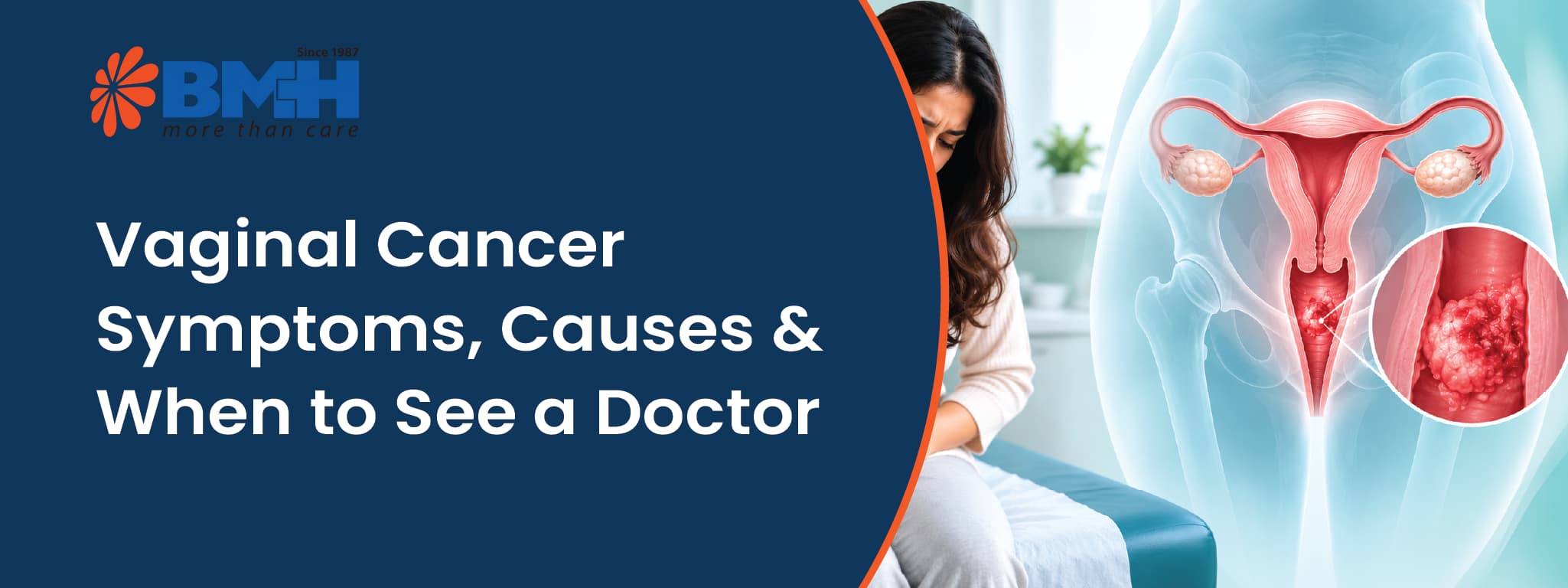

Vaginal cancer is a rare cancer that develops in the tissues of the vagina. Common symptoms can include unusual vaginal bleeding, watery or foul-smelling discharge, pelvic pain, pain during intercourse, or a lump in the vagina, although some women may have no symptoms in the early stages.
This guide explains the key vaginal cancer symptoms and causes, including the role of HPV and other risk factors. It also covers how vaginal cancer is diagnosed and staged, the tests doctors use to confirm it, and the main treatment options. You’ll also learn when persistent or unusual vaginal symptoms should be evaluated by a gynaecologist or cancer specialist.
What Is Vaginal Cancer?
Vaginal cancer develops when cells lining the vagina, the muscular canal connecting the cervix to the outside of the body, begin to grow and divide uncontrollably. Most cases start in the squamous cells that line the vaginal walls, and this type, called squamous cell carcinoma, makes up close to 9 out of 10 diagnoses. A smaller share are adenocarcinomas, which begin in glandular tissue, and a rare few are sarcomas, arising from the muscle and connective tissue of the vaginal wall.
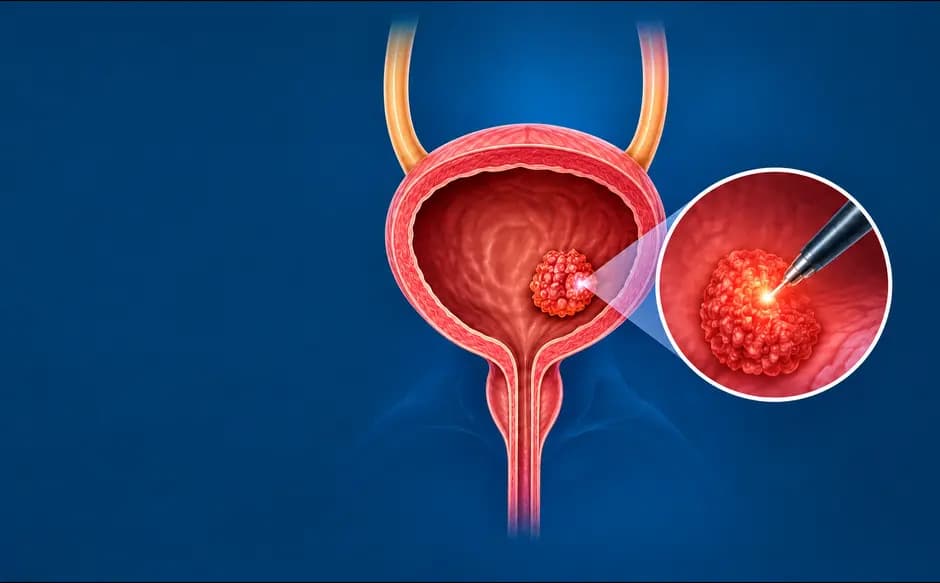
It's important to separate primary vaginal cancer (which starts in the vagina itself) from cancer that has spread to the vagina from elsewhere, most often the cervix, uterus, bladder, or rectum.
Secondary vaginal involvement is actually far more common than primary vaginal cancer, which is one reason gynaecologic oncologists always investigate the origin of a tumour before finalising a treatment plan, as explained by NewYork-Presbyterian.
Early Warning Signs and Symptoms of Vaginal Cancer
Here's the part that catches most people off guard: in its earliest stages, vaginal cancer frequently causes no symptoms at all. Precancerous changes or very small, superficial tumours confined to the vaginal lining often go unnoticed until a routine pelvic exam or Pap test picks them up.
Once the disease becomes invasive, though, symptoms usually do appear. Which is exactly why "I have no symptoms" should never be mistaken for "I don't need a check-up."
Symptoms by Stage:
| Stage | Typical Symptoms |
|---|---|
| Early / precancerous (VAIN) | Usually none; found incidentally on Pap smear or pelvic exam |
| Invasive, localised | Abnormal vaginal bleeding (after intercourse, between periods, or after menopause); watery or blood-tinged discharge; a palpable lump or mass in the vagina; pain during intercourse |
| Locally advanced | Pelvic pain; pain during urination; constipation; a feeling of pressure in the pelvis |
| Advanced / spread beyond the vagina | Back or leg pain; swelling in the legs (lymphedema); blood in urine or stool; unexplained weight loss |
Symptoms That Are Often Mistaken for Something Else
This is where most delays happen. Postmenopausal spotting is frequently written off as "hormonal." Discharge is blamed on an infection.
Pain during intercourse is attributed to vaginal dryness. All of these can, in fact, be entirely benign, but according to the** CDC**, any vaginal bleeding that isn't normal for you warrants a same-week doctor visit, and any other symptom that persists for two weeks or longer, even a mild one, should be evaluated rather than self-managed. The only way to tell the difference between an infection and something more serious is a clinical exam, not guesswork.
If you have persistent or unusual vaginal symptoms, BMH offers cancer screening tests to help identify concerning changes early. A specialist assessment can determine whether further testing is needed rather than leaving the symptoms to guesswork.
What Causes Vaginal Cancer? Risk Factors Explained
Vaginal cancer begins when DNA mutations in vaginal lining cells disrupt normal growth control, but a handful of well-documented factors make that mutation more likely.
1. HPV infection.
This is the single biggest driver. Approximately 75% of vaginal cancers are linked to human papillomavirus (HPV). The same high-risk HPV strains responsible for most cervical cancers are implicated here, which is why HPV vaccination and cervical screening indirectly protect against vaginal cancer too.
2. Age.
Vaginal cancer is uncommon before age 40, and nearly half of all cases are diagnosed in women over 70. Age-related cumulative HPV exposure, along with natural cellular changes over decades, appears to play a role.
3. History of cervical cancer or VAIN.
Women previously treated for cervical cancer have a measurably higher risk of later developing vaginal cancer. Vaginal intraepithelial neoplasia (VAIN), abnormal but non-cancerous cell changes in the vagina, usually HPV-driven, is itself a recognised precursor.
4. DES exposure.
Women whose mothers took diethylstilbestrol (DES), a synthetic hormone once prescribed during pregnancy between the 1940s and 1970s, have an elevated risk of a specific rare subtype called clear-cell adenocarcinoma. This is now largely a historical risk factor, since DES was withdrawn from obstetric use decades ago, but it remains clinically relevant for women born to mothers treated during that window.
5. Smoking and alcohol use.
Smoking has been shown to roughly double the risk of developing vaginal cancer, likely by weakening the local immune response to HPV infection in vaginal tissue.


How Is Vaginal Cancer Diagnosed?
Diagnosis typically begins with a routine pelvic exam and Pap smear, which can pick up abnormal cells before they become symptomatic. If something suspicious is found, the next steps usually include:
- Colposcopy: A magnified visual exam of the vaginal walls using a lighted scope
- Biopsy: A tissue sample from any visible lesion, examined under a microscope for a definitive diagnosis
- Imaging: CT, MRI, or PET scans to check whether the cancer has spread beyond the vagina to lymph nodes or other organs
- Cystoscopy or proctoscopy: Used selectively, to check whether nearby organs like the bladder or rectum are involved
Treatment Options for Vaginal Cancer
Treatment is stage-dependent and usually combines more than one approach:
- Surgery: Removal of the tumour, and in some cases part or all of the vagina (vaginectomy), sometimes alongside nearby lymph nodes
- Radiation therapy: Including external beam radiation and brachytherapy (internal radiation delivered directly to the vaginal tissue), which is often the primary treatment for many vaginal cancers, particularly when surgery would affect nearby organs like the bladder or rectum
- Chemotherapy: Sometimes combined with radiation (chemoradiation) to improve local control in more advanced cases.
Since vaginal cancer is uncommon, treatment planning often benefits from input across multiple specialties. At NAVA Cancer Institute, Baby Memorial Hospital, Kozhikode, cases can be reviewed through a multidisciplinary tumour board involving surgical, radiation, and medical oncology expertise, allowing the treatment plan to be considered from different clinical perspectives.
Vaginal Cancer Care at NAVA Cancer Institute, BMH
For a rare cancer such as vaginal cancer, treatment planning can benefit from input across surgical, radiation, and medical oncology. NAVA Cancer Institute at Baby Memorial Hospital, Kozhikode, brings these specialties together within one oncology centre.
Key points include:
-
Multidisciplinary review: Cases can be assessed by surgical, medical, and radiation oncology teams to develop a coordinated treatment plan.
-
Brachytherapy and precision radiation: NAVA has GammaMedplus iX HDR brachytherapy and TrueBeam technology supporting IGRT, IMRT, and VMAT.
-
Specialist oncology care: The team includes Dr. John J. Alapatt, Dr Veena B Ganga, Dr Sanoor Neha Kamath in Surgical Oncology and Prof. Dr. P.R. Sasindran, Dr Dhanya KS, Dr Midhun Murali and, Dr Vineeth Mathew Johnin Radiation Oncology.
-
Integrated cancer services: Imaging, pathology, surgery, radiation, and systemic cancer treatment can be coordinated within the same hospital.
-
Access for patients travelling to Kozhikode: BMH also supports patients coming from other parts of India and overseas for specialist cancer care.
When considering treatment for vaginal cancer, ask whether the centre has multidisciplinary oncology review, on-site brachytherapy, and coordinated surgical and radiation expertise. These practical factors can be more useful when comparing cancer centres than hospital branding alone.
Can Vaginal Cancer Be Prevented? When to See a Doctor
There's no guaranteed way to prevent vaginal cancer, but risk can be meaningfully reduced:
- HPV vaccination before the onset of sexual activity substantially lowers lifetime risk of HPV-linked cancers, including vaginal cancer
- Routine Pap smears and pelvic exams, especially after age 40, catch precancerous VAIN before it progresses
- Quitting smoking reduces risk given the documented link between tobacco use and vaginal cancer
- Prompt evaluation of any unusual bleeding, discharge, pain, or a palpable lump, rather than waiting to see if it resolves on its own
- See a doctor immediately if you notice new bleeding after menopause, bleeding between periods, or bleeding after intercourse. See a doctor within two weeks for any other new, persistent symptom, a lump, unusual discharge, or pelvic pain that doesn't improve. Most of the time, these symptoms turn out to be something other than cancer.
Conclusion
Vaginal cancer is rare, but it isn't rare enough to ignore, and the biggest risk isn't the disease itself so much as the delay that comes from mistaking early symptoms for something more familiar and harmless.
The practical takeaway is straightforward: know that HPV is the leading cause, know that bleeding after menopause or between periods is never "normal," and know that a rare diagnosis deserves a centre with genuine subspecialty depth rather than general gynaecologic care alone.
If you or someone you know is dealing with unexplained gynaecologic symptoms, getting a timely evaluation, from a team that sees these cases regularly, is the single most important step you can take.
You don't need a diagnosis to ask a question. Chat with our care assistant to understand next steps, or connect with NAVA Cancer Institute's gynaecologic oncology team at Baby Memorial Hospital, Kozhikode, for a clinical evaluation.
Medical Disclaimer: This article is intended for general informational purposes only and does not constitute medical advice, diagnosis, or treatment. Always consult a qualified gynaecologic oncologist or healthcare provider regarding any symptoms, diagnosis, or treatment decisions specific to your condition.